Quick Routine Summary for Dry Skin
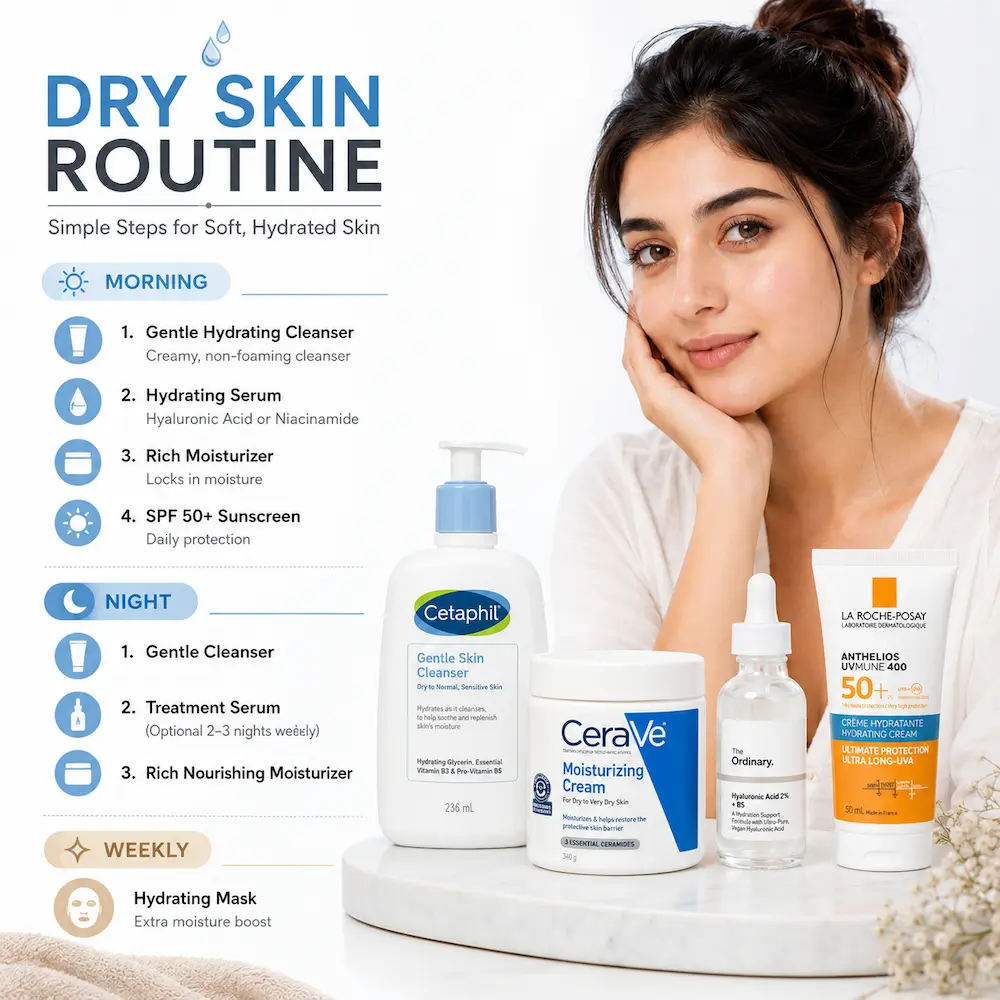
Morning
Step 1. Gentle hydrating cleanser
Step 2. Hydrating serum, hyaluronic acid or niacinamide
Step 3. Rich moisturizer
Step 4. SPF 50+ sunscreen
Night
Step 1. Gentle cleanser
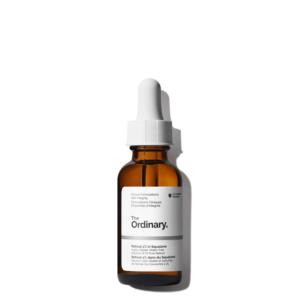
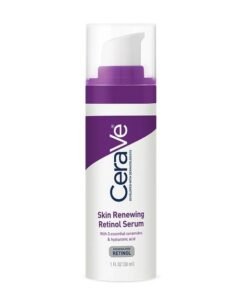
Step 2. Treatment serum, optional, 2 to 3 nights per week
Step 3. Rich nourishing moisturizer
Weekly
A hydrating mask once a week to give skin an extra boost of moisture.
Why Dry Skin Needs a Different Approach
Dry skin does not produce enough oil. That sounds simple but the effects are not. Tight skin after washing. Flaking around the nose and cheeks. A dull complexion that no amount of water seems to fix. Fine lines that look more visible than they should.
If this sounds familiar you have dry skin. And the frustrating part is that most skincare advice is not written for you. Products are often too light, cleansers strip what little moisture you have, and nobody tells you the real reason your skin keeps feeling uncomfortable.
Dry skin lacks lipids, the natural fats that form your skin barrier. When this barrier is weak moisture escapes and irritants get in. The goal of a dry skin routine is not just to add water to your skin. It is to seal that moisture in and repair the barrier so your skin holds it.
This guide gives you a simple, honest morning and night routine built specifically for dry skin with products you can buy in Pakistan right now.
What Causes Dry Skin
Understanding why your skin is dry helps you make better product choices.
Genetics
Some people are simply born with fewer sebaceous glands or glands that produce less oil. If your skin has always felt dry regardless of season or climate this is most likely the cause.
Weather and Environment
Cold dry winters in cities like Lahore, Islamabad, Peshawar and Swat pull moisture out of the skin. Air conditioning in summer does the same thing indoors. Both conditions accelerate water loss through the skin barrier. This is why sunscreen is essential even in winter.
Wrong Cleanser
This is the most common and most fixable cause. Foaming cleansers and soaps that lather heavily strip the skin barrier. If your face feels tight after washing your cleanser is too harsh. Choosing the right cleanser for dry skin is one of the most impactful changes you can make to your routine
Hot Water
Hot showers and hot water when washing your face dissolve the lipids in your skin barrier. Lukewarm water is always better for dry skin.
Age
Skin produces less oil as you get older. Dry skin that appears or worsens in your 30s and 40s is often age-related and responds well to richer moisturizers.
Morning Skincare Routine for Dry Skin
Your morning routine for dry skin has one priority above everything else. Do not strip what moisture your skin already has. Every step should add or protect, never take away.
Step 1. Cleanser
Dry skin needs a cleanser that removes overnight buildup without touching the skin barrier. Foaming cleansers and gels that lather heavily are the wrong choice here. You want something creamy, milky, or hydrating that leaves your skin feeling comfortable after rinsing, not tight.
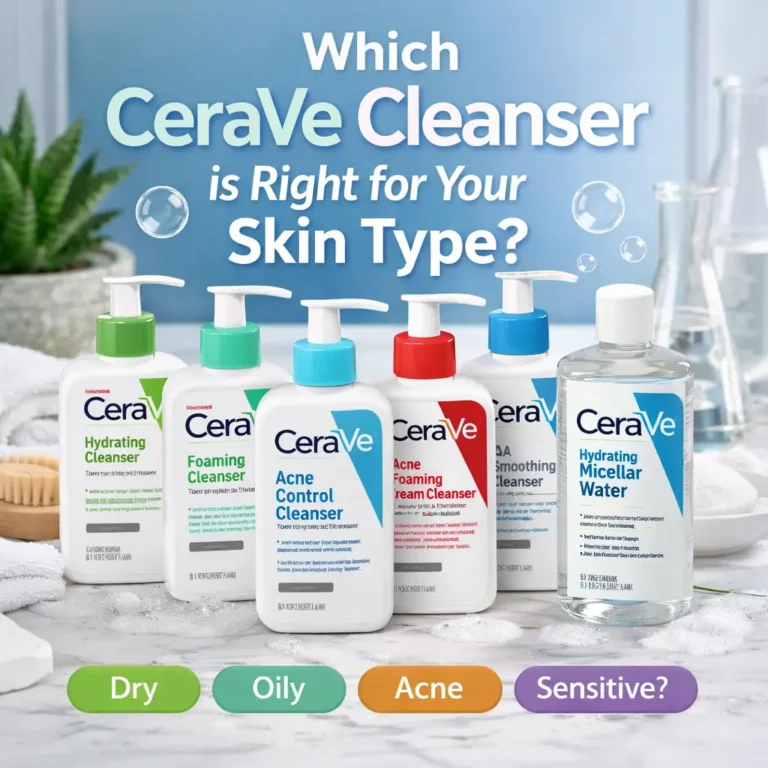
The Cetaphil Gentle Skin Cleanser and CeraVe Hydrating cleanser are one of the most recommended cleansers for dry skin for a reason. It has a non-foaming milky texture that cleans without disrupting the barrier. Your skin does not feel stripped or tight after using it. It is fragrance-free, gentle enough for sensitive skin, and works for both face and body. For dry skin this is the cleanser to start with.
Use lukewarm water. Rinse gently. Pat dry, do not rub.
Step 2. Hydrating Serum
After cleansing apply a lightweight serum before your moisturizer. For dry skin the best serum ingredient is hyaluronic acid.
Hyaluronic acid is a humectant. It draws water from the air and from the deeper layers of your skin up to the surface. This gives skin an immediate plump, comfortable feeling and holds hydration in place throughout the day.
Apply 2 to 3 drops to slightly damp skin. The moisture on your skin helps hyaluronic acid work better.
One important note. Hyaluronic acid serum must always be followed immediately by a moisturizer. If you apply it and leave it without sealing it in, it will actually pull water out of your skin in dry conditions instead of adding it. Never skip the moisturizer after a HA serum.
Step 3. Moisturizer
This is the most important step for dry skin. Your moisturizer does two things. It adds moisture and it seals your barrier so that moisture cannot escape.
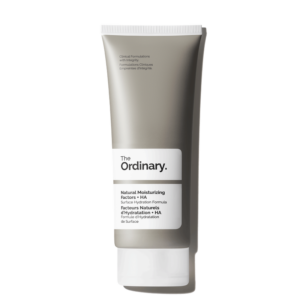
For dry skin you need a richer moisturizer than what most lightweight gel formulas offer. Look for ceramides, fatty acids, and occlusives like shea butter or petrolatum in the ingredients.
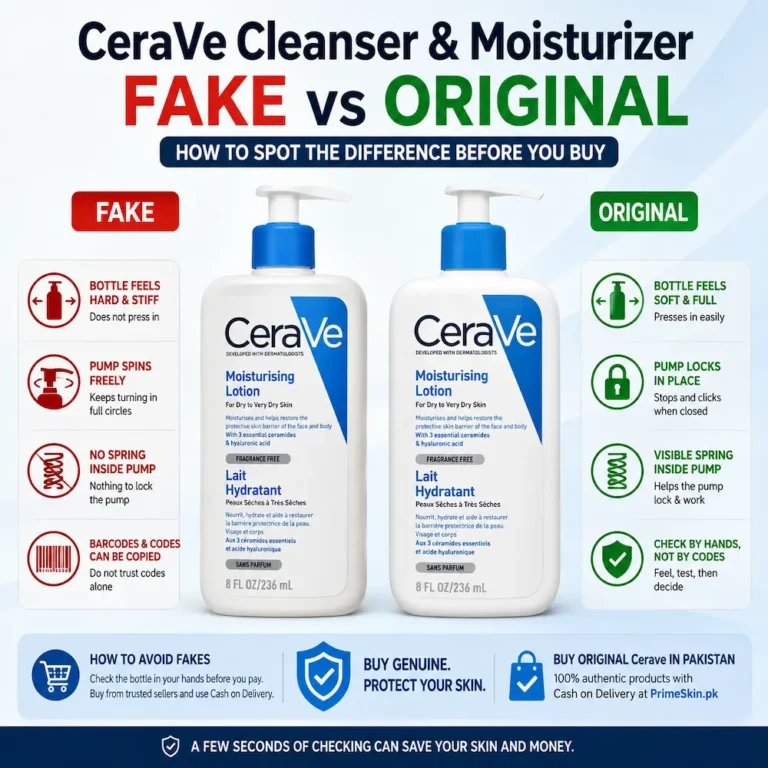
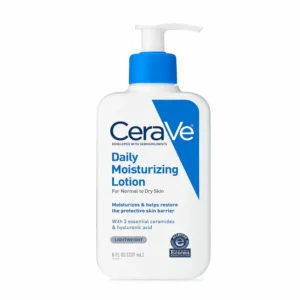
The CeraVe Moisturizing Cream is one of the best moisturizers available for dry skin. It contains three essential ceramides that rebuild the skin barrier, hyaluronic acid for hydration, and a texture that is rich but not greasy. It works for face and body which makes it practical and good value. This is the moisturizer we recommend most for dry skin on PrimeSkin.pk.
If you prefer a lighter texture that still delivers real hydration the Cetaphil Moisturising Lotion is a strong alternative. It is clinically proven to hydrate for 48 hours, contains niacinamide, panthenol and avocado oil, and absorbs quickly without feeling heavy. Good for dry skin that is not extremely dry.
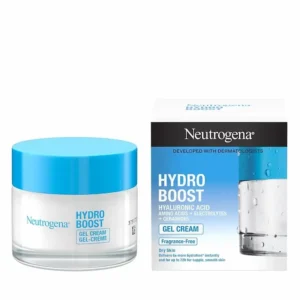
The Neutrogena Hydro Boost Gel-Cream is another option worth mentioning. It has a gel-cream texture that feels lighter than a traditional cream but still delivers deep hydration through its hyaluronic gel matrix. Works well for dry skin in warmer months when a thick cream feels like too much.
Apply your moisturizer immediately after your serum while skin is still slightly damp. This locks in the hydration from both steps.
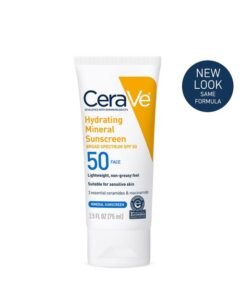
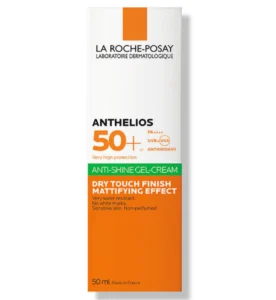
Step 4. Sunscreen
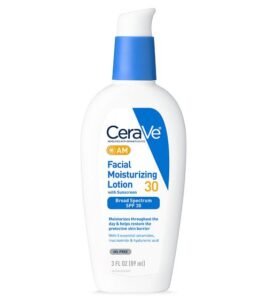
Sunscreen is not optional for dry skin. UV damage breaks down collagen and weakens the skin barrier further, two things dry skin already struggles with. Long term sun exposure also makes dryness and fine lines significantly worse.
For dry skin choose a sunscreen with a hydrating or serum-like texture rather than a matte or oil-controlling formula. You do not need oil control. You need protection that does not strip moisture.
The Beauty of Joseon Relief Sun Rice and Probiotics SPF 50+ PA++++ is an excellent choice for dry skin. It has a gentle hydrating texture, contains rice extract and probiotics that soothe and support the skin barrier, and leaves no white cast. It feels comfortable on dry skin without tightening or drying throughout the day.
Apply as the last step every morning. Reapply every two hours if you are outdoors.
Night Skincare Routine for Dry Skin
Your night routine is when the real repair happens. While you sleep your skin goes into recovery mode and absorbs active ingredients more effectively. For dry skin night time is the opportunity to give your barrier the richer, more intensive support it needs.
Step 1. Cleanser
Use the same gentle cleanser from your morning routine. At night the goal is to remove sunscreen, dust, and any buildup without stripping the skin. Your Cetaphil Gentle Skin Cleanser handles this well.
If you wear makeup use a micellar water first to remove it before cleansing. This is double cleansing and it prevents your regular cleanser from having to work harder than it should.
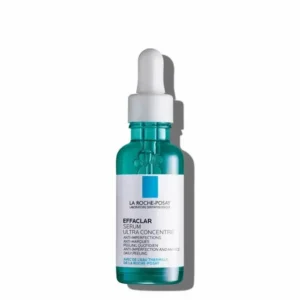
Step 2. Treatment Serum (Optional)
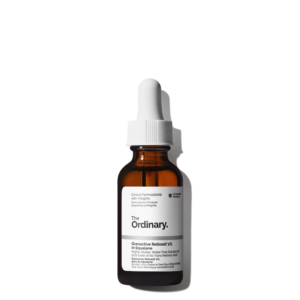
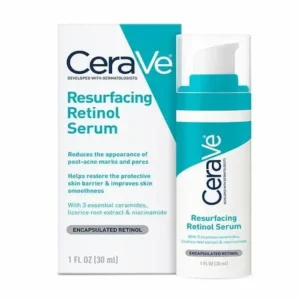
For dry skin treatment serums are optional and should be chosen carefully. Actives like retinol and AHAs are effective but can increase dryness and sensitivity if your barrier is already compromised. If your skin is very dry and irritated skip actives entirely until your barrier is restored.
If your barrier is healthy and you want to address specific concerns like uneven tone, fine lines, or dark spots you can introduce a treatment serum 2 to 3 nights per week. Niacinamide is the gentlest active for dry skin and can be used more frequently without causing irritation.
Start slow. One or two nights per week. If your skin tolerates it well you can gradually increase.
Step 3. Moisturizer
At night use your richest moisturizer. There is no sunscreen over it and your skin is in repair mode so a heavier application is completely appropriate.
The CeraVe Moisturizing Cream works well here too. Apply a generous amount and let it absorb. For very dry skin you can apply a slightly thicker layer at night than in the morning.
If your skin is extremely dry you can try applying your moisturizer to slightly damp skin after cleansing and serum. The added moisture underneath the cream gives your skin an extra hydration boost overnight.
Key Ingredients for Dry Skin
Ceramides
The most important ingredient for dry skin. Ceramides are lipids that naturally exist in your skin barrier. When the barrier is compromised ceramide levels drop. Replenishing them with a ceramide moisturizer directly repairs the barrier and reduces water loss. CeraVe products are built around ceramide technology.
Hyaluronic Acid
A humectant that holds up to 1000 times its weight in water. Draws moisture to the skin surface and keeps it there. Works best when applied to damp skin and immediately sealed with a moisturizer.
Niacinamide
More commonly associated with oily skin but equally effective for dry skin. Strengthens the barrier, reduces redness, and improves the overall resilience of skin. Gentle enough for daily use.
Panthenol (Pro-Vitamin B5)
Soothes dry, irritated skin and helps the skin retain moisture. Found in Cetaphil Moisturising Lotion. Works alongside ceramides to support barrier function.
Glycerin
A humectant found in most good moisturizers. Draws water into the skin and prevents moisture loss. Works best in combination with occlusives that seal it in.
Shea Butter and Fatty Acids
Rich emollients that soften the skin surface and fill in gaps in the barrier. More commonly found in night creams and richer formulas for very dry skin.
Ingredients to Avoid With Dry Skin
High alcohol concentrations in toners and some serums evaporate quickly and pull moisture out of dry skin. Avoid products that list alcohol near the top of the ingredients list.
Harsh foaming cleansers with sulfates strip the skin barrier. The lather feels satisfying but it removes oils your dry skin cannot afford to lose.
Fragrance, while not directly drying, irritates a compromised barrier and causes inflammation that makes dryness worse. Fragrance-free products are strongly recommended for dry skin.
Strong actives like high-concentration AHAs and retinoids used too frequently increase skin cell turnover faster than a compromised barrier can recover. Introduce these slowly and only after your barrier is in good shape.
Common Mistakes People With Dry Skin Make
Using a harsh cleanser
If your skin feels tight after washing your cleanser is stripping your barrier. Switch to a milky or non-foaming formula immediately.
Skipping moisturizer in summer
Dry skin needs moisturizer in every season. Air conditioning in summer creates the same barrier-stripping effect as cold winter air. Never skip.
Applying hyaluronic acid serum and not following with moisturizer
Hyaluronic acid needs to be sealed in. Without a moisturizer on top it draws moisture from your skin instead of adding to it. Always follow with cream.
Over-exfoliating
Dry skin has a weaker barrier to begin with. Exfoliating too frequently damages it further and causes redness, sensitivity, and more dryness. Once a week at most.
Expecting quick results from moisturizer
Rebuilding a damaged skin barrier takes time. Clinical studies on ceramide moisturizers show full barrier restoration in around 4 weeks of consistent use. Give your routine time.
Frequently Asked Questions
What is the difference between dry skin and dehydrated skin?
Dry skin is a skin type, your skin naturally produces less oil. Dehydrated skin is a condition, your skin lacks water, not oil. Dehydrated skin can happen to any skin type including oily skin. Dry skin benefits from rich moisturizers with ceramides and fatty acids. Dehydrated skin responds better to humectants like hyaluronic acid and glycerin.
Which moisturizer is best for dry skin in Pakistan?
CeraVe Moisturizing Cream is one of the most recommended options. It contains ceramides that repair the barrier and hyaluronic acid for hydration. Cetaphil Moisturising Lotion is a lighter but equally effective alternative for skin that is dry but not severely so.
Can dry skin use niacinamide?
Yes. Niacinamide is one of the best ingredients for dry skin. It strengthens the barrier, reduces redness, and improves overall skin resilience. It is gentle enough for daily use and works well in both morning and night routines.
Should dry skin use a toner?
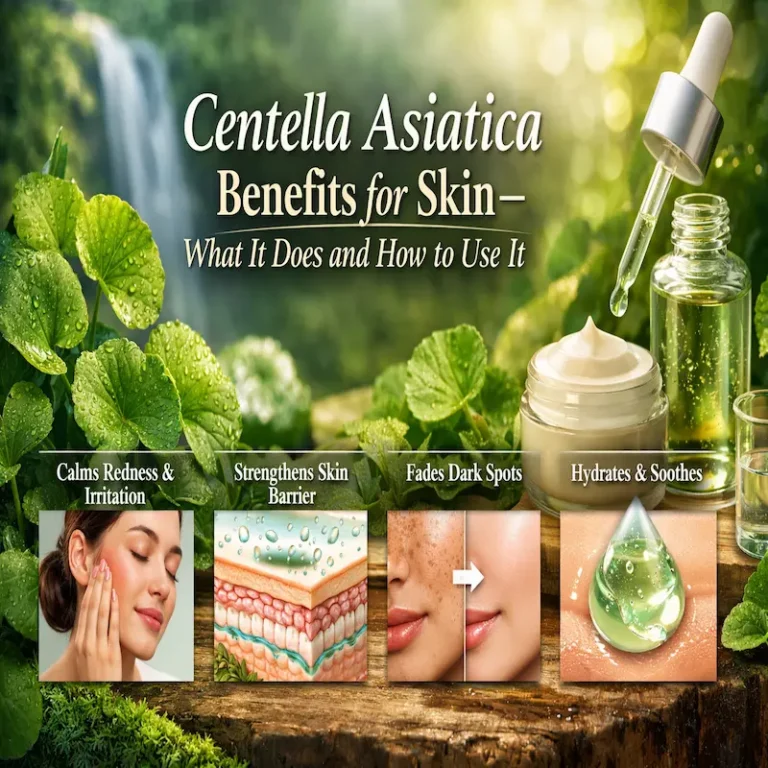
Most traditional toners contain alcohol and should be avoided by dry skin. If you want to use a toner choose an alcohol-free hydrating toner with ingredients like glycerin, hyaluronic acid, or centella asiatica.
How often should dry skin be exfoliated?
Once a week at most. Use a gentle chemical exfoliant like a low-percentage lactic acid or PHA rather than a physical scrub. Over-exfoliating damages a barrier that dry skin is already struggling to maintain.
Why does my dry skin get worse in winter?
Cold air holds less moisture than warm air. When you go outdoors in winter your skin is exposed to very low humidity which accelerates water loss through the barrier. Indoor heating makes this worse by further drying the air. Using a richer moisturizer in winter and applying it to slightly damp skin helps significantly.
Can dry skin use retinol?
Yes but carefully. Retinol increases skin cell turnover which can initially increase dryness and sensitivity. Start with the lowest concentration available, use it once a week only, and always apply a rich moisturizer after. Build up slowly.
Is drinking water enough to fix dry skin?
Drinking water helps overall health but it does not directly fix dry skin. Dry skin loses moisture through the barrier faster than water intake can replace it. The fix is topical, using the right cleanser, a good moisturizer, and protecting the barrier. Drinking water supports your skin but cannot replace a proper routine.