Centella asiatica has been used in traditional medicine for centuries, but its place in modern skincare is well earned. Over the last few years it has moved from a niche Korean beauty ingredient to something you will find in serums, moisturizers, and toners across the world. The reason is simple: it works, and it works for a wide range of skin concerns without causing irritation.
If you have seen it on an ingredient list and wondered what it actually does, this guide covers everything you need to know about what it is, what the research says, how to use it correctly, and what to realistically expect.
What is centella asiatica?
Centella asiatica is a small herb that grows naturally in Asia, Africa, and parts of the Pacific. It has several names you might recognise. Gotu kola, tiger grass, and cica are all common in skincare. The active compounds responsible for its skin benefits are called triterpenoids, and the most important ones are asiaticoside, madecassoside, asiatic acid, and madecassic acid.
These compounds are not just marketing language. They have been studied for their ability to support wound healing, reduce inflammation, and stimulate collagen production. The concentration and ratio of these compounds in a product determines how effective it actually is, which is why the source and formulation matter.
What does centella asiatica do for skin?
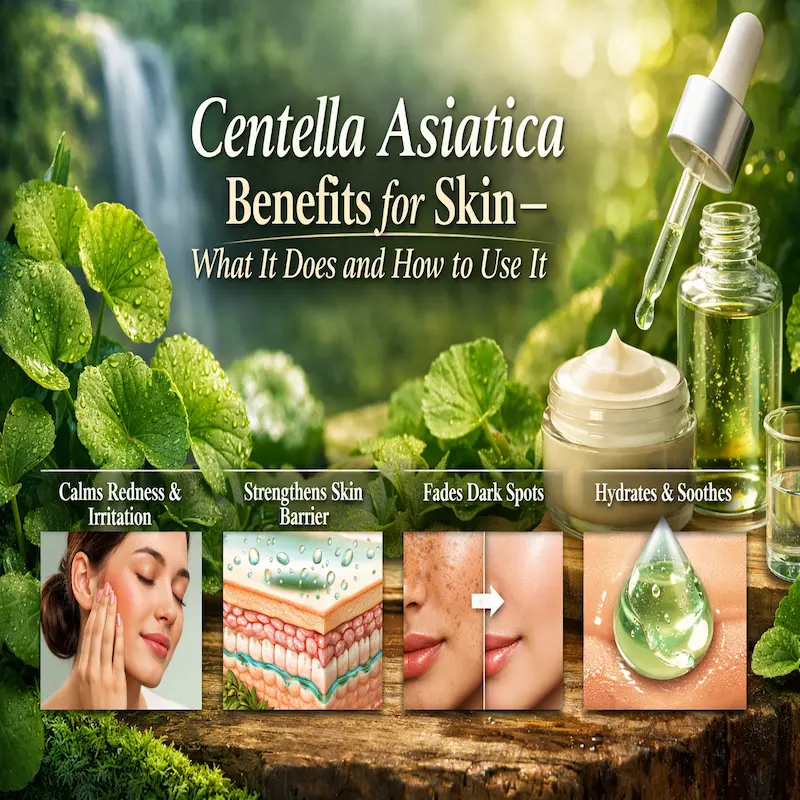
1. Calms redness and irritation
This is where centella asiatica genuinely stands out. Madecassoside in particular has strong anti-inflammatory properties that help calm reactive skin. If your skin tends to flush easily, becomes red after cleansing, or feels easily irritated by active ingredients like retinol or acids, centella asiatica helps reduce that response. It does not numb the skin. It actually helps regulate the inflammatory signals that cause redness in the first place.
This is also why it appears so often in post-procedure skincare. Dermatologists frequently recommend centella-based products after chemical peels, laser treatments, and microneedling because it speeds up the calming process without interfering with skin recovery.
2. Strengthens the skin barrier
Asiaticoside has been shown to boost the production of collagen type I in the skin. Collagen is not just about anti-aging. It is a core structural component of a healthy skin barrier. When the barrier is strong, skin holds onto moisture better, becomes less reactive, and is more resistant to environmental damage.
For anyone dealing with dehydrated skin, sensitivity, or a compromised barrier from overusing strong actives, centella asiatica helps rebuild that foundation over time. It will not do it overnight, but consistent use over several weeks produces a noticeable difference in how resilient the skin feels.
3. Fades post-acne marks and pigmentation
Centella asiatica does not work the same way as vitamin C or niacinamide for brightening. It does not directly inhibit melanin production. What it does is support faster skin cell turnover through its wound-healing properties, and it reduces the low-grade inflammation that keeps post-acne marks looking dark and raised for longer than necessary.
For people prone to post-inflammatory hyperpigmentation, which is very common in darker skin tones, centella helps the skin recover from breakouts more efficiently. The marks still fade naturally, but the process is faster when inflammation is controlled.
4. Hydrates without heaviness
Centella asiatica has natural humectant properties, meaning it attracts and holds moisture in the skin. It is not as potent as hyaluronic acid for pure hydration, but it delivers a softer, more comfortable skin feel without the heaviness of thick emollients. This makes it well suited to oily and combination skin types that need hydration without clogging pores.
Who should use centella asiatica?
Centella asiatica is genuinely one of the most universally tolerated skincare ingredients available. It suits sensitive, reactive, acne-prone, and combination skin particularly well. It is also a good choice for anyone who is building tolerance to stronger actives like retinol, since using centella alongside retinol it helps offset some of the initial irritation.
That said, it is not a miracle ingredient for everyone. If your skin concerns are primarily about dark spots or dullness without any redness or sensitivity, vitamin C or niacinamide may deliver more visible results for those specific goals. Centella is most powerful where there is inflammation, sensitivity, or barrier damage involved.
People with allergies to plants in the Apiaceae family, which includes celery, carrots, and parsley, should patch test carefully, as there is a small risk of cross-reactivity.
How to add centella asiatica to your routine
When to apply it
Centella asiatica can be used morning and evening. There are no restrictions around sun exposure like there are with AHAs or retinol. In the morning, apply it after cleansing and before your moisturizer and sunscreen. In the evening, it works well as a treatment step after any water-based serums and before heavier moisturizers.
If you are using it to calm irritation from retinol, apply the centella product first and let it absorb for a few minutes before applying your retinol. This creates a buffer that reduces sensitivity without blocking the retinol from doing its job.
What to layer it with
Centella asiatica plays well with most other skincare ingredients. It combines well with niacinamide for barrier repair and oil control, with hyaluronic acid for layered hydration, and with ceramide-rich moisturizers for comprehensive barrier support. It also pairs very well with azelaic acid if you are targeting both redness and pigmentation at the same time.
What not to mix with it
There are no strict incompatibilities with centella asiatica, but using it with very high concentrations of vitamin C at the same time is generally unnecessary. Both have antioxidant properties and calming effects, so layering them together does not double the benefit. Use one in the morning and the other in the evening for better results.
Avoid mixing centella with very high-strength exfoliating acids in the same step. The acids can temporarily compromise the barrier, and centella works best when the skin is in a calm state. Use them in separate steps or on alternate days if you are concerned about sensitivity.
What results should you realistically expect?
Centella asiatica is not a quick fix. Most people notice their skin feeling less reactive and more comfortable within one to two weeks of consistent use. Visible improvement in redness, post-acne marks, and overall skin texture typically takes four to six weeks of daily use.
The products that contain the highest concentrations of the active triterpenoids tend to deliver the most noticeable results. A product listing centella extract low on the ingredient list is unlikely to do much. Look for products where centella asiatica or madecassoside appears in the first half of the ingredient list, or where the brand specifies the concentration.
One of the most studied centella products available right now is the Skin1004 Madagascar Centella Asiatica Ampoule, which contains 100% pure centella extract and has become a widely recommended option for sensitive and acne-prone skin. If you are looking to try a properly concentrated centella product, you can find it at PrimeSkin.pk.
Frequently asked questions
Is centella asiatica good for acne-prone skin?
Yes. Centella asiatica helps reduce the inflammation that makes acne worse and speeds up the healing of post-acne marks. It does not unclog pores the way salicylic acid does, so it works best as a calming and recovery ingredient alongside your main acne treatments rather than as a replacement for them.
Can centella asiatica be used every day?
Yes, it is gentle enough for daily use morning and evening. Unlike retinol or strong acids, it does not require a slow build-up period. Most people can introduce it into their routine immediately without any adjustment phase.
Is centella asiatica the same as cica?
Yes. Cica is simply a shortened name used in Korean skincare marketing. Tiger grass is another common name for the same plant. All three terms refer to centella asiatica and its derivatives.
How long does centella asiatica take to work?
Most people notice their skin feeling calmer and less reactive within one to two weeks. More visible changes in redness, texture, and post-acne marks generally take four to six weeks of consistent daily use. Results depend heavily on the concentration of active compounds in the product you are using.
Can I use centella asiatica with retinol?
Yes, and it is actually a good combination. Centella helps reduce the irritation and dryness that often comes with starting retinol. Apply centella first, wait a few minutes, then apply retinol. This buffering technique is well established and does not reduce retinol effectiveness.
Is centella asiatica safe for all skin tones?
Yes. Centella asiatica does not affect melanin production, so it carries no risk of uneven lightening or hyperpigmentation. It is suitable for all skin tones including deeper skin tones that are more prone to post-inflammatory hyperpigmentation, where its anti-inflammatory properties